In this lesson we're looking at the Disney-styled pixie dust magical effect. If you enjoyed the swarms article, you may like this one too as it's a dot/speck based effect.
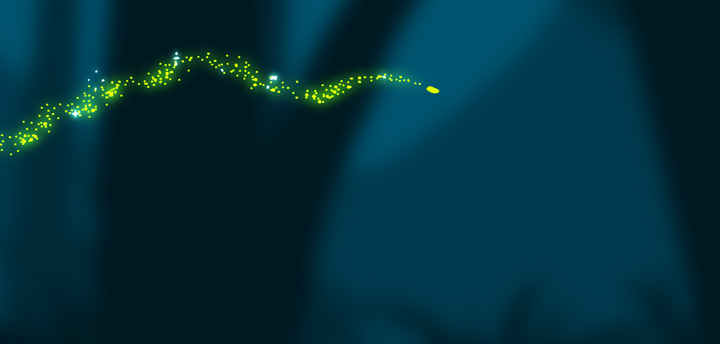
Fig. 1 - pixie dust always looks best against a dark scene
Who knows? Pixie dust is made of magic and when you're talking about Disney, magic consists of hope, dreams, imagination, love and all that crap. In animation though, the way we treat it is like something with brightness, substance, weight and a bit of life. Tiny glowing particles with the weight of something like salt grains.
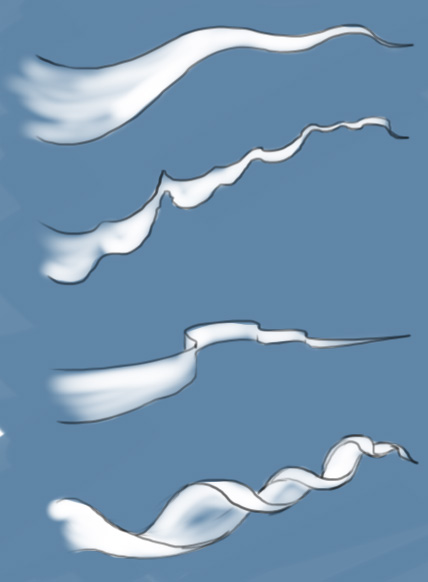
Fig. 2 - Design ideas for pixie dust trails
Pixie dust in animation is dots. We layer it with stars and tiny particle explosions, but the bulk of the work is in a huge amount of dot-dot-dot-dot-dot animation. Working on the Peter Pan sequel, "Return to Neverland", I remember everyone in the FX department driving each other (and anyone within earshot) completely insane with our incessant hammering of pencils onto paper. The sound of a dozen mini jack hammers running all day, every day for many months.
While the workload was later shared with the CGI department, their mathematically precise particle simulations were lifeless by comparison. For the CG guys, the amount of tweaking - testing - retweaking - retesting required just to get something that looked "alive" was time consuming and difficult.
Simple falling particles is easy for a CG simulation. The difference is that magical pixie dust isn't just falling dead particles, like salt from a salt shaker. Pixie dust has life, which is inherited directly from the inconsistencies built into the artist's hand.
When an artist creates a trail of pixie dust, there's variation in the particle clusters and the gaps between them. Many aspects such as density, particle size and speed are hugely varied, well beyond what anyone could call "random". This comes straight from the artist's inability to make things perfectly consistent. The result is artistic by nature.
Figure 2 looks at various designs for a pixie dust trail, including (from top to bottom) standard, drapery, ribbon, corkscrew. Can you come up with some more?
A particle generator is ultra consistent, and every single particle has birth, life and expiry. Each particle can be watched from the moment it's born to the time it expires. Individual aspects of these can be controlled and randomised but at its core, it's mathematically precise.
And yet I have never seen a particle simulation that comes close to the beauty of pixie dust that's been painstakingly hand-animated by a talented 2D FX animator. As I've already mentioned, the charm and artistic quality of hand-animated pixie dust comes from inconsistency. While computed particle simulations take care of some truly mind-numbing tasks, including sheer numbers of individual particles/objects like clouds, swarms and flocks, they generally don't often have a feeling of life.
Essentially the animation of pixie dust is animating the weight of each particle or cluster and how they float or fall. It's this individual attention that livens up hand-animated particles. You saw this in the swarm article back in Lesson 0703.
IN the video below I'll demonstrate and talk you through the animation of a pixie dust trail.
video 40_pixieDustAnim
The most obvious treatment for pixie dust is a glow effect for that light-emitting quality.
It's important that you don't make your glow effect too heavy because particles will end up appearing fat and chunky. In a cluster they'll appear to merge together as a solid blob, which is the opposite of what you want; a light magical "dust" effect.
Extra layers are good! If you have a secondary layer of stars or tiny pops and fizzles, you can treat these separately as you saw in the previous video. While my pixie dust has a yellow-green glow, my star/sparkles layer has a tight blue glow. This special treatment gives the starts a more striking quality, than if it was the same pixie dust glow. It also adds life to the effect, saying "this is more than just a trail of dust, it's got magic in it!"
video 40_pixieDustScene
Pixie dust can be tough if you're just starting out, especially if you find the dot-dot-dot animation boring. If that's the case, I suggest you start with a very sparse trail of just a handful of particles. Perhaps 10-20 particles at most.
Try to get a feel for animating clusters, or regions of particles, rather than the individual particles. This makes pixie dust animation much easier.