We're going to learn about dirt. More specifically, how fresh, rich dirt clumps and clods as it impacts with a surface. There are many forms of heavy particles and grains with some level of cohesion and clotting. A few other examples are flour, brown sugar, custard powder... hmm I have a sudden urge to bake a cake.
Anyway, this lesson looks at how clumping and clotting looks and moves under certain conditions, like flying through the air and impacting with the ground. The ideal scene for this will be someone digging a hole in rich soil and dumping spades full of it on the ground.
Particles may clump and hold together for various reasons, the first and most obvious being moisture. If you've ever dug a hole on the beach, you'll know that it's better where the sand is wet because it holds its shape. When you dig a hole in dry sand, the sides are constantly falling in because there's no moisture holding it all together. As another example, try making a sand castle with dry sand. It's a pretty futile and somewhat sad endeavour.
Other reasons that particles might clump are:
Exercise
Besides the above examples, and obvious stuff like .. GLUE, can you think of other ways that particles clump together? Find or photograph some examples of the above for your reference library
The sand castle example is a good one, so let's stick with that for now. When you have clumped particles holding a shape like this, they are reluctant to part. Sure, it's easy to smash a sand castle but most of the particles continue to bond, only in a more disorganised fashion.
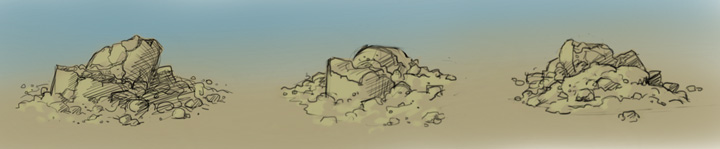
Fig. 1 - A few practise images of smashcastles
This is essentially what we'll be doing in this lesson. Designing and animating those disorganised clumps, broken from their adhesion and dumped into a pile. Generally it can be a pretty forgiving effect because of the changeable volumes. At other times it can be quite difficult to animate realistically. The main advantage is that there's very little settling animation required. Once these clumps hit the ground, they stop pretty quickly and remain motionless.
Most of the work in this scene will be making the mass of dirt look like dirt. There's no hard and fast rules about how to construct a clod or clump, so it's just about practise and reference. Look at pictures of dirt, or smash your own sandcastles. Then see if you can put it down on paper.
video 41_dirtImpact1
Now let's look at animating this scene. The video below demonstrates how quick this effect resolves, giving you more time for intricate detail and extra layers of movement.
video 41_dirtImpact2
To summarise the timing of this effect (bearing in mind the scale of the scene) the drawings of the main volume are on twos, while the separate debris layers are each animated on ones.
There's not much to say about treatment of this effect, besides the simple suggestion of using many separate layers. The more independent movement you can give to the many pieces of debris by doing it on individual layers, the better the scene will look.
You can avoid a flat look in a couple of ways. The first is to give the dirt a two-tone colour scheme, just like the old two-tone dust cloud, i.e. a base colour and a darker shadowy colour. If you don't have the time and patience for this, you could try simply colouring your linework lighter than the dirt base colour. This shows up the contours without the use of two-tone light and shadow.
Going back to the sand castle example, you would animate it in a very similar way to the dirt exercise you've seen here.