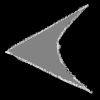
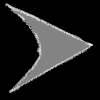
In design and animation, the generally bad habit of making the same shape appear several times is referred to as "twinning". For example, animating a character's hair blowing in the wind. If you inadvertently make the left side look the same as the right side, that's twinning. Same with a water splash. It always looks nicest if you can make the splash asymmetrical, making the left look different to the right, and not just a mirror image.
In Figure 1, the left hand splash has an almost symmetrical design. I'm not saying symmetry is impossible in nature, but you can create a more INTERESTING design without adding extra complexity. The splash on the right is not any more complex or in any way more difficult than the first. It simply has no symmetry, thus a more natural, organic design.
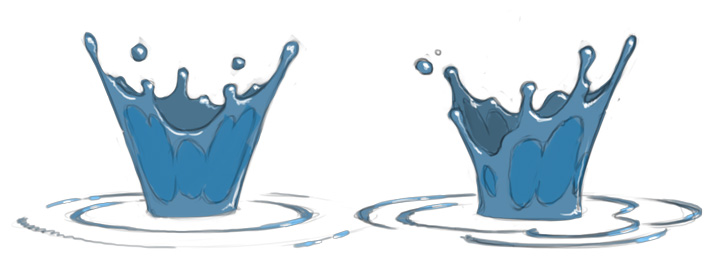
Fig. 1 - Left: twinning - Right: a more natural design
Take note also of the ripples in Figure 1. Those on the left are fairly mechanical.. a little "samey" and too perfectly elliptical. Those on the right however have asymmetry and so they're much more natural.
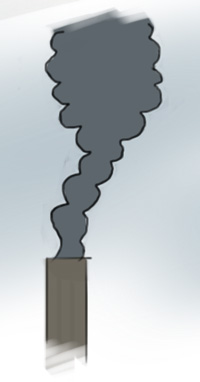
Fig. 2 - lol
Throughout this course so far, you may have heard me mention "breaking it up". Sometimes this refers to dissipation or progression of an effect - for example a water sheet breaking into strings and beads - but it sometimes refers to adding a natural type of randomness or disorder so the effect doesn't appear mechanical: breaking up the repetitiveness of a design.
Remember the "popcorn" style of dust and smoke? See Figure 2. That ugly, corrugated pattern in cloud lines is one example of twinning, or otherwise duplicating similar shapes over and over.
This goes for other effects too. For example, a water surface with too much of the same wave shape makes it appear mechanically generated or "samey". Figure 3 illustrates how variation makes a more interesting, natural surface with every wave at a different stage of movement. To see this animated would likewise show every wave doing something different, moving in any number of directions.
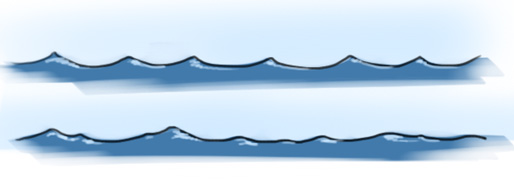
Fig. 3 - Top: boring; Bottom: "broken up" design for natural variation
In FX, we're all about making our designs look natural, or realistic. So twinning or recreating the same shape in various parts of our work can be a nasty habit to fall into, and a difficult one to break. This is troublesome in FX, and especially phenomena that naturally have repeated shapes. Take bubbles, for example. How do you avoid making thirty bubbles look like the same bubble duplicated thirty times? Further down the page, we'll talk about just that.
The twinning problem also rears its head when it comes to clusters of objects, like bubbles, clouds in the sky, swarms, water beads to name a few. Spacing shapes too evenly is what should be avoided in situations where you want to achieve a natural look.
On the other hand, complete randomness can also be somewhat problematic. It's aesthetics we're going for, so a mathematically random pattern may not be the best approach. Often times you're aiming for a scene that needs to appear natural, while maintaining a certain artistic balance.
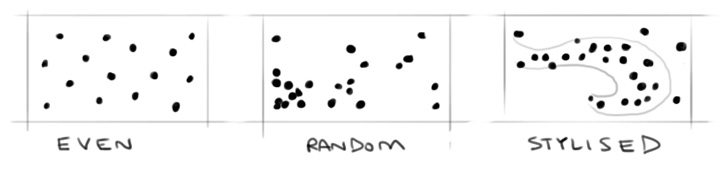
Fig. 4 - types of scattering
One way to approach it is to first place a few of these objects at random distances apart, then gradually add others amongst them, deciding along the way what feels best and removing those that seem to be out of place. Chances are that if you start with a well-considered, natural design drawing, the finished scene will look good.
Exercise - Imagine a field of sheep and mark their positions as dots. Some sheep may wander further from the flock as they graze, while some just happen to be nearer to others. If you're a sheep psychology expert, forget any possible behavioural aspects for now. Just concern yourself with placing them as naturally as possible.
In the video below I'm creating a star field using my best judgement to make it appear natural, while adding a level of stylisation for balance and an artistic quality.
video 35_starfield
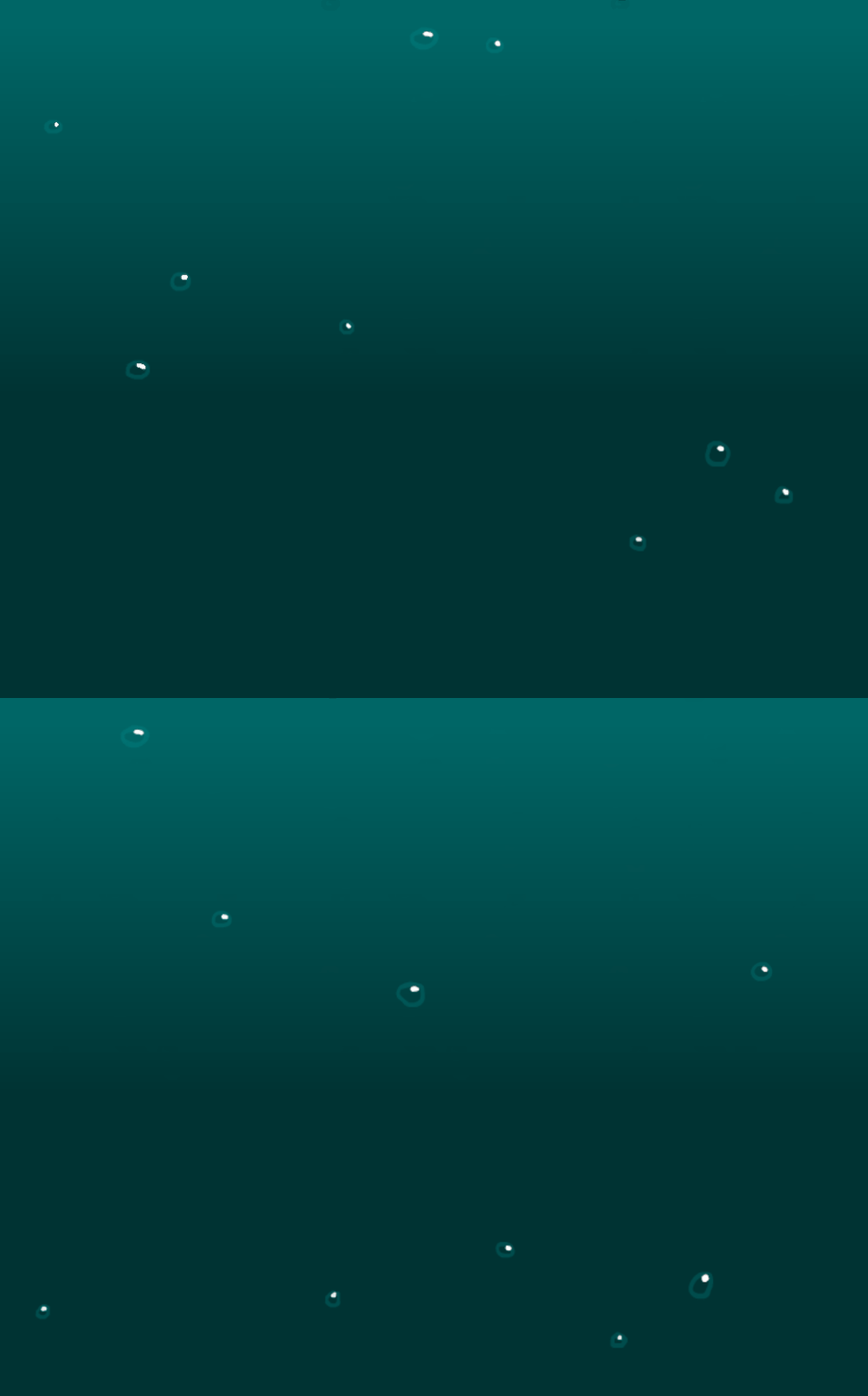
As well as occurring in design, twinning can be a bad habit in animation. At the start of this article I mentioned hair blowing in the wind, which is one example to visualise. Something a little easier to demonstrate would be bubbles underwater. It's one thing if every bubble looks the same, but if every bubble also moved at the same speed and followed the same wriggly path to the surface, the scene could very quickly appear cheap or mechanical.
You could set up your own rules and stick to them throughout the scene. Maybe the biggest bubbles move faster. This way, timing is tied to the variation in your design. "The bigger the bubble, the faster it rises".
You can also vary the path of each bubble. Fast bubbles might follow a slightly wavy path upwards, while the slower bubbles have an exaggerated wavy path, as seen in the example at left.
In this example you can see the small bubble has a very consistent wriggle.. left right left right left right. Don't get me wrong, it IS fine to do this! But if you have many bubbles, it's a good idea to break it up (there's that term again) with some variation.
There are places where it's alright to have the effects appear mechanical, repetitive and "samey". Machines that generate an effect, like fire, smoke or water may do so with some kind of measured precision. A gas burner produces an unnaturally perfect flame both in terms of design AND timing. It has been engineered to release gas gradually, as opposed to a natural fire that explodes or burns with ferocious chaos. The aerator in a fish tank filter pumps oxygen through the water in a very mechanical way, so the bubbles are evenly spaced and of the same size.
One great example is a fountain. When volumes of water move at a consistent rate through a pumping system, the result is generally a mechanically frequent ripple. The same applies with fountains that have spraying, falling or projected volumes of water.
Next time you see a fountain or other man-made water feature, take note of any repetition in the water surface. Not just airborne beads or waves, but the reflections too. Think about how those can be applied in your animation.
As you've seen, repetitive shapes do appear in real-world effects, particularly man-made. It's when you're aiming for a natural chaos that you need to avoid, or at least be aware of twinning.
Having this in the back of your mind will help you in all aspects of animation and visual art. Whether you're animating a swarm or a splash, whether you're painting a flower field or a star field, understanding twinning will enhance your work with a natural and believable quality.
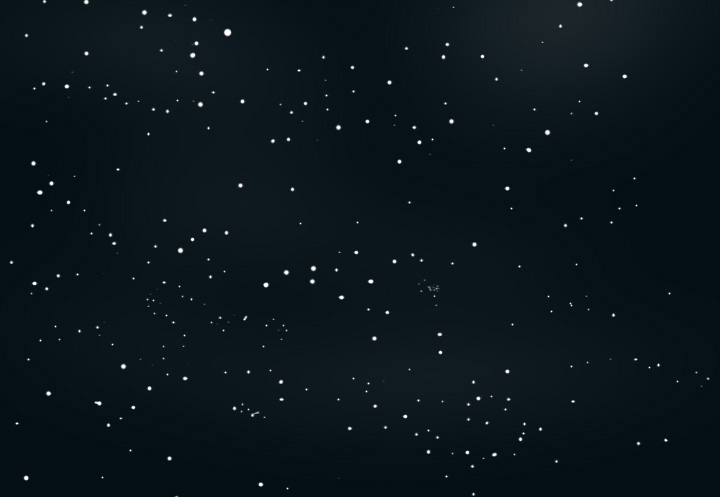
Fig. 5 - Somewhat stylised but quite believable