This marks the first level in which you'll be applying your knowledge of effects to magic, which means stylising, bending and controlling natural phenomena to do your bidding.
In our very first lesson way back in Level 1, we animated some lightning and learned how to give it realistic impact, timing and design. This time, as well as studying electricity with flowing arcs and more graceful movement, we'll be taking liberties with realistic natural behaviour as we apply them to magic.
Stylising electricity may not be as simple as it sounds because so much is possible in reality. By now we know how electricity should look and move, but what can we do to make it look otherworldly, or fantastical?
As you saw in lesson 0101, a great thing about electricity is its chaos. We can apply some really crazy shapes and mix it up with flowing movement. It's incredible what we can get away with in electricity animation. You only need to watch some real electricity, even in a controlled experiment, to see the amazing shapes that can form. If this craziness exists in the realm of possibility, it's safe to say we can do almost whatever we want in magical electricity animation.
The video above is an amazing example of the sheer chaos in electricity, even on a small scale. You can pause the video on any frame and the electricity looks completely different from any other frame in the entire video. Maybe this isn't always what we want in our FX animation, but it certainly shows just how much we can get away with.
video majelex_dal
Here is the opening cinematic that I did for Dragon Age Legends called "A Legend is Born". The lightning style builds somewhat realistically but takes on a living serpentine quality as it flies through the air.
video majelex_design
In the video above, I'm working on some unique design ideas, but below is a really good exercise in design. I call it the alphabet test and you'll see it used in future effects lessons too. Creating an alphabet is a great way to practice and refine your skill in designing any effect, as it encourages you to push FX into very specific shapes.
video majelex_alphelex
Just like design, the timing of any effect may be stylised for magic. This could mean making the effect faster, or slower, giving it character, strobing or perhaps some kind of stagger timing. Most commonly, I think the effect is timed with realism at its core, and any stylising is embedded in the design.
In the video below I'm working on some magical electricity using a character I built during my time with EA2D for another Dragon Age game called Dragon Age Journeys. Here I'm using Flash and this FX animation here wasn't part of the game itself, because I'm animating it just for this lesson.
video majelex_daj_anim
When cycling electric magic you can fall into the same traps as any other cycled effect, which is that a short cycle always looks repetitious as it pulses cheaply. Try to either make your cycles as long as possible in relation to the length of the scene, or create a couple of short cycles that can be sequenced randomly, as seen in the video below.
video majelex_alphelexCycle
Exercise
Create your name in electrical alphabet, then animate each letter with three short cycles, sequenced randomly, as demonstrated in the video above.
When it comes to electricity, any bright colour glow is going to impress. It's the intensity of that glow that can ruin or cheapen the effect so go easy; aim to make it realistic. Be very careful that you don't make the light look like a solid "skin" or some kind of heavy shell. Remember, it's just light, flaring into a camera lens, or through a haze (as seen in the previous lesson).
In the animation below, you can see I've added the final treatment to the fighter's magic lightning spell.
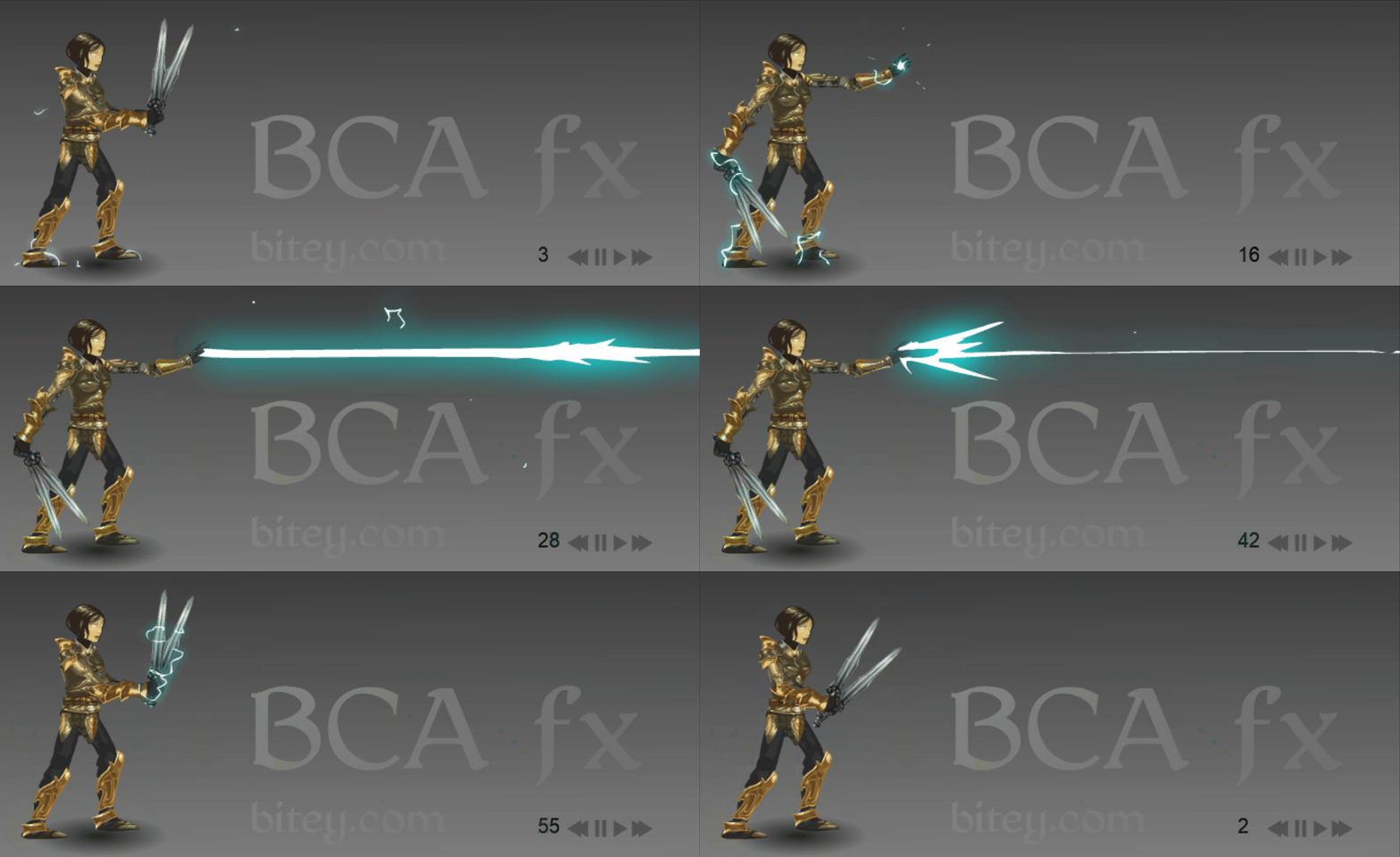
You'll notice a few variations on the old standard blue glow treatment, just to give it a bit of something extra. Namely, the occasional flicker of red, with touches of green and yellow are what gives the whole effect a non-standard feel.
The magic of animation is that anything can be brought to life, and anything can be given character. When FX are especially designed to break the rules or even to have character, we get magic, but understanding real-world phenomena is crucial in stylising it. In other words, you have to know the rules in order to know how best to bend or break them!
In future lessons we'll be studying many more magical effects that are based entirely on real world effects, so the very best way you can prepare for fantasy and magical effects is to practise the real world stuff!