Fire, combustion, explosion all have to start with the ignition. This lesson will look at how a fire starts in animation. There are many ways between gradual and sudden that something can ignite. We'll be looking at some design and timing ideas for a few of these. Along the way you'll draw on your knowledge of smoke and fire animation from previous lessons.
Ignition occurs when conditions become perfect for combustion. In many cases this means that fuel has become hot enough to burst into flame or begin smouldering. In other cases, it simply means a chemical reaction causes sudden ignition, for example when volatile chemicals mix, or a spark ignites gas.
Below is an excellent ignition reference for a spark igniting gas.
In the videos below I've recorded reference for flint sparks, a gas lighter ignition, a match strike and a flame ignition.
video ignitions
As we go through our design and timing study for these effects below, I'll refer back to these videos.
As heat gradually increases and fuel begins to burn, for example with friction or magnified sunlight on dry wood, we begin to see smoke. Ultimately ignition occurs when the heat is enough to produce an ember or flame. Fanning or blowing the ember feeds it with oxygen, so the heat and brightness are increased. At this point, bringing the ember into contact with fine tinder will help to produce an ignition.
Before flaming occurs, it can be a smoky process. If the flame doesn't appear, the ember will eat gradually away at the fuel producing smoke, otherwise known as smouldering. Cigarettes and incense for example are designed to smoulder continuously without catching fire. The ember burn is a very gradual process and doesn't usually need animation. However we saw how to animate ribbon smoke back in lesson 3, which can be combined with a glowing ember for a realistic effect.
When you strike a match, you're creating heat via friction within a ready-made chemical fuel source. In my slow-motion match striking video below, you can see that the strike friction creates a small ember on the match head, which then flares into an ignition.
Here's that slow motion video of a match strike, which shows you some of the interesting flash shapes that the naked eye normally misses.
video matchStrike1
Now let's take a look at how we go about designing a match strike, using the earlier video reference as a guide. Later in the Timing section we'll be animating each of these.
video ignition_refStudy
video ignition_design1
When a flint wheel on a gas lighter sparks an ignition, it's essentially a small explosion that starts off the combustion. Just like the match strike, the initial ignition can be quite spectacular, even at normal speed. For this reason it's a fun effect to animate and you can really enjoy designing the shapes. It may be worth considering that a gas lighter sparks a mid-air ignition, while a match strike sparks a surface ignition.
As mentioned in the reference video, the spark effects are very brief. If you're going for realism, it's only 1-2 frames. If you'd like to exaggerate the effect, you could go with a timing more like the oxy-acetylene flint lighter reference. Big sparks with molten beads flying through the air, bouncing off surfaces.
Exercise
Design a spark scene with 5-8 drawings of ignition stages from a cigarette lighter or oxy-acetylene flint lighter. When designing the flint sparks, see the earlier ignition video for reference.
Ignition can occur when flame is passed from one fuel source to another, for example, a match to a candle. The ignition may not be as wild or interesting as an explosive one but can present its own set of unique challenges. Lighting a candle with another is a very quiet scene and relatively simple to animate. In the video below, I'm designing the lighting of a torch, which you'll see animated, coming up in the Timing section.
video ignition_torchDesign1
In the design section you saw me designing some key poses of a match strike. Now let's animate that using the reference video as a timing guide.
video ignition_matchAnim1
You're almost through level 5 now, so you may find that animating a candle lighting another candle is a simple, even boring scene. So let's throw you a challenge. You'll be following what I'm doing in the video below; lighting a medieval torch from a candle.
video ignition_torchAnim2
Lighting a fuse in animation is tons of fun because it's chaotic and you get a chance to play with shapes in a big way. At its most crude, a fuse is a string of gunpowder suspended in a tube of twisted paper. This makes for an extremely chaotic and unpredictable chain of ignition. The match strike is a single "flash-and-flare", but a gunpowder fuse is a long string of them.
video ignition_fuseAnim1
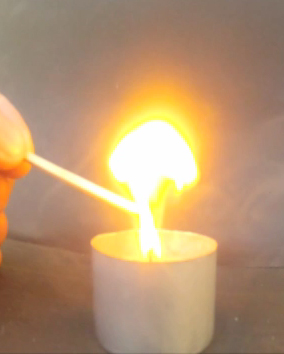
At some point in this course, I'd be repeating myself with regards to treatments. Suffice to say that you're at the stage now where you should be starting to develop your own style in all aspects of effects, not only in treatment but also in design and timing. So in future lessons I'll only include the treatment section if I have a special something to say about colouring or treating effects.
In the reference videos, one thing that is very noticeable is the distinct colouring of the the flame glows (see Figure 1). There's nothing stopping you from picking these exact colours for your flame glow treatments.
For ignition treatments, the main thing to be aware of is that the initial flash-and-flare stage can generally have brighter colours and glow filters, as seen in Figure 2 below. The glow is much brighter in the first few frames and dies down to ordinary flame glows after about 10-12 frames.
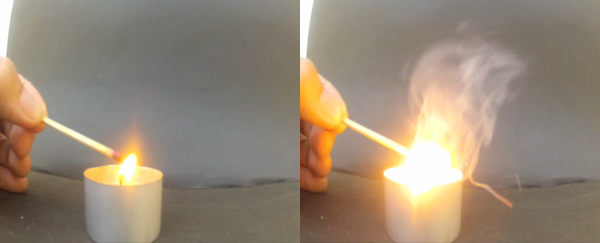
Fig. 2 - The initial flare is the bright part.
With this lesson adding to your fire animation arsenal, you're equipped to become an animation pyromaniac. In a future lesson we'll be studying large scale fires and extinguishing them, which should round you off nicely!
I guess I must stress the importance of safety when lighting and recording your own fire and ignition reference. I strongly recommend keeping a small fire extinguisher, bucket of water or sand, or a woollen blanket, just in case. Take care to protect your eyes and hands too. You'll need those for animation.
In the files directory of this Lesson pack, you'll find the following sequences which you can import into your animation software for the match and torch ignition exercises.