Boiling, pooling, melting.. we've been looking a lot lately at common household FX; stuff we see every day around the home. This lesson is along similar lines; it's about frothy, bubbly, sudsy foam.
Generally speaking, foam is an aerated liquid, such as soap, milk, egg whites and so on. The liquid itself determines the strength and density of the foaming. For example, the following types of foam hold their shapes very well. Let's call this list DENSE FOAM:
What do these have in common? The thickness of the lather and subsequently how well it holds its shape comes from the size of the bubbles. The aeration is consistent and thorough, so there are millions of tiny bubbles.
When you whisk egg whites, the longer you whisk, the stiffer the foam becomes. Why? Part of the reason is the stickiness and sliminess of the liquid. The other part is because you're breaking those bubbles down to be smaller and smaller. As seen in the video below, large bubbles don't easily burst because of the heavy liquid, but smaller bubbles are even harder to burst. So it takes about 3 minutes for this egg white to become a thoroughly aerated, stiff foam.
video 47_eggWhites
Above video: Beating 2 egg whites (speed x 10)
OK so we've seen some dense foam. How about thinner stuff you may have seen?
Any of these will become more and more dense with agitation. For another common example, shampoo starts with a few bubbles and you can easily work it up into a heavy lather. Swish bubbly spit back and forth through your teeth more and more and eventually you'll have froth. The leather straps on a bridle will whip up the horse's sweat into foam. It all works on the same principle. The smaller the bubbles, the more dense the foam.
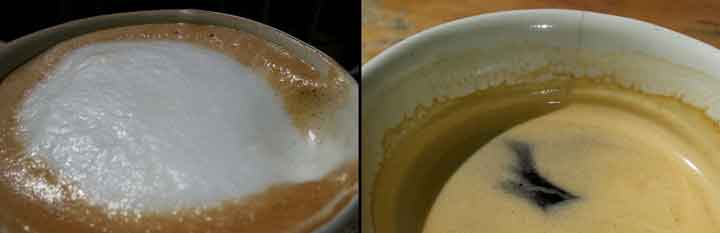
Fig. 1 - Left: Milk whipped into a creamy foam for cappuccino. Right: black coffee "crema".
The one thing all of these have in common is the viscosity of the liquid. Detergent, saliva, eggs, cream; all of these are relatively thick liquids in which air is more easily trapped. Once a bubble is in there, it can't easily get out. Therefore, the thicker the liquid, the less agitation required for dense foaming. As you know then, clean water doesn't foam well because bubbles move easily through the liquid. They rise to the surface and pop very quickly, even with strong, sustained agitation.
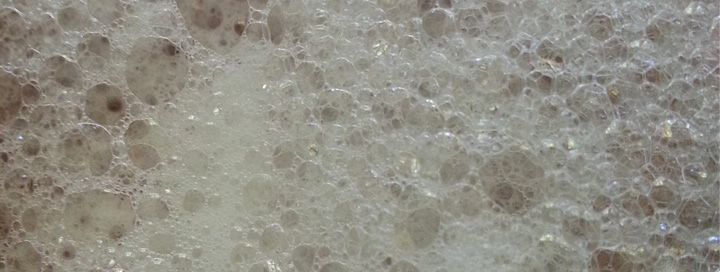
Fig. 2 - Washing up detergent creates a lighter foam with highly varied bubble size.
There are any number of applications for foaming in animation. The heavy foaming from a rabid dog, or tooth brushing scene, to light fluffy clouds of soap suds in a sink. Each present their own challenges. In the videos below we'll look at a few designs for different foam types.
video 47_design
video 47_design2
A beer head may be creamy or fluffy and can hold its shape for quite a long time. This is far from a universal rule though. The way you animate any foam will depend on the specific scene requirements. At the base of a waterfall for example, you have an opportunity to churn up the water, constantly forming new foam that dissipates very quickly, only to be replaced by more. In the video below, we'll look at the animation of foam at the base of a waterfall.
video 47_waterfallFoam
Above video: Animating bubbles on a foam base
Let's look at something like the beer foam we saw in the design section.
video 47_beerFoam
Above video: Animating beer foam
On most liquids, highlights are essential. As bubbles get smaller though, it becomes more and more tedious, and eventually impossible to add a highlight to each individual one. It's still there though. Greatly magnified, you can see that each bubble has its own tiny highlight. This gives dense foam a velvety appearance, which you can achieve with an overall hand-drawn lighting effect, rather than individual bubble highlights.
In the video below, you can see simple highlight treatment on the bubbles animation. There is more that could be done in this scene's foam effects though, with more lighting and of course the foam reflected in the water surface.
video 47_waterfall
Above video: Bubble highlight treatment on the foam base, loop 9x
As you can see in the video above, lighting effects like tones and highlights help to give not only the bubbles but also the foam a nice realism.
Foaming is a unique challenge in FX and as earlier mentioned, presents varying levels of difficulty depending on the scene requirements. The main body of foam is nothing too challenging in animation, but making it look like bubbly froth can make it a tedious effect. As you've seen in this article, there are ways of simplifying it in both design and animation so it passes as a beautiful, high quality effect.
In the files directory, you'll find the waterfall image sequence (zipped) - 8 single images 960 x 540. Suggested waterfall timing, on twos at 24fps.